Can three months of juggling practice change an adult brain?
Researchers scanned the brains of adults before and after they practised juggling for three months. Grey matter increased in brain areas involved in processing visual motion. After three more months without practice, these increases partly reversed (Draganski et al., 2004).
The brain responds to what we do repeatedly, and some of those changes fade when the practice stops.
This capacity of the brain to change is called neuroplasticity. It is related to psychological flexibility, but the two are not the same. This article explains both, what research does and does not show, and one tested way to practise a different response.
What is neuroplasticity?
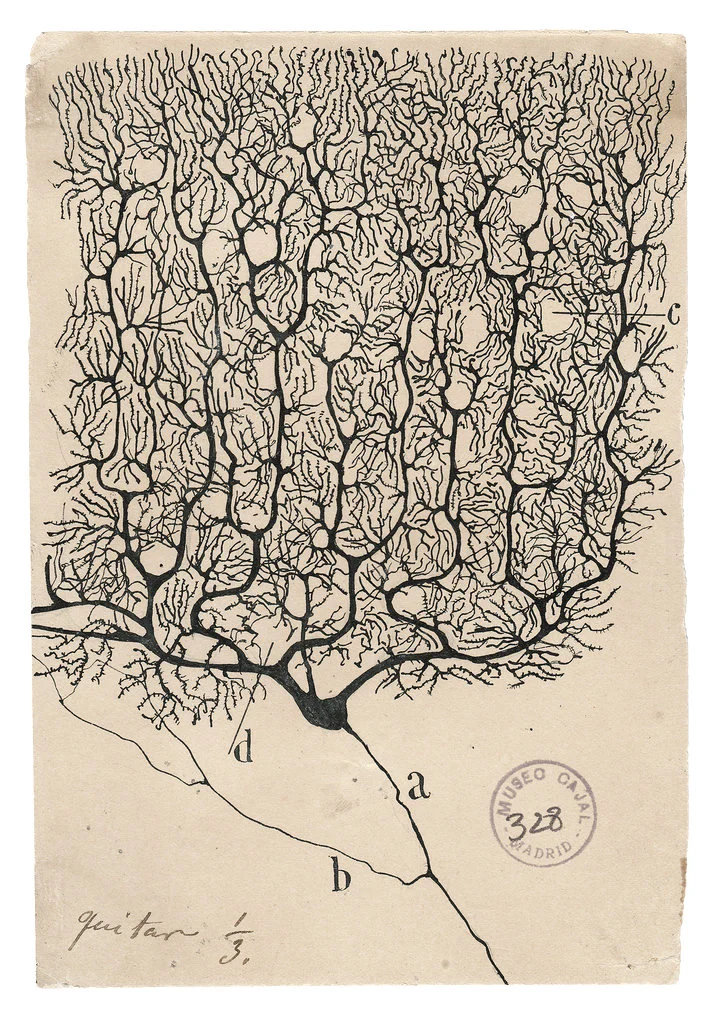

Definition
Neuroplasticity is the brain’s capacity for structural and functional change in response to experience, learning and practice. Researchers describe plasticity as an intrinsic property of the nervous system that continues throughout life (Pascual-Leone et al., 2005).
The juggling study showed change over a few months. A second well-known study looked at what happens after years of practice.
Study
Researchers compared brain scans of licensed London taxi drivers, who had spent years learning to navigate the city, with those of people who did not drive taxis. The drivers had larger posterior hippocampi, a region involved in spatial memory. Hippocampal volume was related to how long they had worked as taxi drivers (Maguire et al., 2000).
Both studies point in the same direction: the brain responds to what we repeatedly do. They also show that change takes time and practice.
What is psychological flexibility?
Definition
Psychological flexibility is the ability to stay in contact with difficult thoughts and feelings without being completely controlled by them, while choosing actions that are aligned with your values (Hayes et al., 2006).
It describes a way of responding, not a brain structure.
Further reading: Psychological Flexibility: What It Is and How to Build It
How do the two differ, and how are they connected?
| Neuroplasticity | Psychological flexibility | |
|---|---|---|
| What it describes | The brain’s capacity to change with experience | How we respond to thoughts and feelings |
| Level | Brain structure and function | Behaviour and inner experience |
| How it is studied | Neuroscience methods such as brain imaging | Psychological assessment and everyday choices |
The connection lies in practice. We cannot always choose which thoughts come to mind or which emotions we feel, but we can practise how we respond to them.
Each time we face a difficult experience instead of avoiding it, or make a values-based choice instead of reacting automatically, we practise a new pattern. Repeating that practice is how learning happens, and learning is what neuroplasticity makes possible.
Can a simple plan change how we respond?
One well-tested way to practise a new response is an implementation intention: a plan that spells out in advance when, where and how you will act, in the form “If situation Y happens, then I will do X.”
A meta-analysis of 94 independent tests found that adding such if-then plans to a goal had a medium-to-large effect on reaching the goal. The plans helped people to start acting, to protect their goals from unwanted influences, and to make the planned response more automatic (Gollwitzer & Sheeran, 2006).
If-then plans can also be used for emotional reactions.
Study
Female students with a strong fear of spiders viewed pictures of spiders. Some only told themselves the goal of not getting frightened. Others added an if-then plan, such as “if I see a spider, then I will remain calm and relaxed”, or “then I will ignore it”. Only the students with an if-then plan reported less fear, and their ratings were similar to those of students without spider fear. In a third study, brain recordings (EEG) showed a smaller early visual response to spider pictures in the group with the “ignore” plan (Schweiger Gallo et al., 2009).
These were short laboratory effects on brain activity, not lasting changes in brain structure. They show that a planned response can change how we react in the moment.
Why should we be careful with claims about rewiring the brain?
Neuroplasticity is often oversold, with promises to “rewire your brain in 21 days” that go well beyond the evidence.
Research on mindfulness shows why caution matters. An early study reported increases in grey matter density after an eight-week mindfulness course (Hölzel et al., 2011). A later analysis of two combined randomised controlled trials, with 218 participants, found no evidence of structural brain changes from the same kind of programme (Kral et al., 2022).
Changing everyday habits also takes longer than such promises suggest. In a study of 96 volunteers who repeated a chosen eating, drinking or activity behaviour daily in the same context, the time it took for the behaviour to approach its peak automaticity ranged from 18 to 254 days (Lally et al., 2010).
Change is real, but it is usually gradual and differs from person to person.
This does not mean practice is pointless: people can feel and function better without a visible change on a brain scan. How much changes depends on the kind and amount of practice.
Try it: an if-then plan for one difficult moment
In one experiment, students were asked to write a report during the Christmas holidays. Half also chose a specific time and place to start writing, pictured that moment, and silently committed to using it. Among the students who sent a report back, those with a plan wrote their reports on average 2.3 days after Christmas Eve, compared with 7.7 days for those who had not made a plan (Gollwitzer & Brandstätter, 1997).
Exercise
- Name the goal. Choose one goal that matters to you, and state it as “I intend to…”
- Pick the situation. Identify when and where the opportunity or the difficulty usually appears, as specifically as you can.
- Link the situation to a response. Write one sentence: “If [situation], then I will [response].” For a difficult feeling, the response can be a way of reacting, such as staying calm.
- Picture it and commit. Imagine the situation, and silently tell yourself that you will act on the plan when it comes.
- Repeat in the same context. Carry out the response each time the situation arises. Missing one opportunity does not undo the process.
(If-then planning as described by Gollwitzer & Brandstätter, 1997, Gollwitzer & Sheeran, 2006, and Schweiger Gallo et al., 2009; repetition in a consistent context from Lally et al., 2010.)
In ACT terms, the “then” part can be a small step towards something you value, which ACT calls committed action (Hayes et al., 2006). Linking the two in this way connects the ideas; it is not a tested ACT procedure. If the difficulty you want to work on is intense or long-standing, make the plan with a professional.
Two questions to reflect on:
- In which situation does your automatic reaction most often take over?
- What one response, practised in that situation, would move you towards what matters to you?
Change does not always begin with a major transformation. Sometimes it starts with a different response.
Common questions
Can adults still change their brains?
Yes. Plasticity continues throughout life (Pascual-Leone et al., 2005), although how much and how quickly the brain changes varies with age, health and the kind of practice.
Does therapy change the brain?
All learning involves the brain, and therapy is a form of learning. Research linking specific therapies to specific brain changes is still developing, so it is more useful to focus on changes you can notice in daily life: how you respond, what you avoid less, and what you do more of.
References
- Draganski, B., Gaser, C., Busch, V., Schuierer, G., Bogdahn, U., & May, A. (2004). Changes in grey matter induced by training. Nature, 427(6972), 311-312. https://doi.org/10.1038/427311a
- Gollwitzer, P. M., & Brandstätter, V. (1997). Implementation intentions and effective goal pursuit. Journal of Personality and Social Psychology, 73(1), 186-199. https://doi.org/10.1037/0022-3514.73.1.186
- Gollwitzer, P. M., & Sheeran, P. (2006). Implementation intentions and goal achievement: A meta-analysis of effects and processes. Advances in Experimental Social Psychology, 38, 69-119. https://doi.org/10.1016/S0065-2601(06)38002-1
- Hayes, S. C., Luoma, J. B., Bond, F. W., Masuda, A., & Lillis, J. (2006). Acceptance and commitment therapy: Model, processes and outcomes. Behaviour Research and Therapy, 44(1), 1-25. https://doi.org/10.1016/j.brat.2005.06.006
- Hölzel, B. K., Carmody, J., Vangel, M., Congleton, C., Yerramsetti, S. M., Gard, T., & Lazar, S. W. (2011). Mindfulness practice leads to increases in regional brain gray matter density. Psychiatry Research: Neuroimaging, 191(1), 36-43. https://doi.org/10.1016/j.pscychresns.2010.08.006
- Kral, T. R. A., Davis, K., Korponay, C., Hirshberg, M. J., Hoel, R., Tello, L. Y., Goldman, R. I., Rosenkranz, M. A., Lutz, A., & Davidson, R. J. (2022). Absence of structural brain changes from mindfulness-based stress reduction: Two combined randomized controlled trials. Science Advances, 8(20), eabk3316. https://doi.org/10.1126/sciadv.abk3316
- Lally, P., van Jaarsveld, C. H. M., Potts, H. W. W., & Wardle, J. (2010). How are habits formed: Modelling habit formation in the real world. European Journal of Social Psychology, 40(6), 998-1009. https://doi.org/10.1002/ejsp.674
- Maguire, E. A., Gadian, D. G., Johnsrude, I. S., Good, C. D., Ashburner, J., Frackowiak, R. S. J., & Frith, C. D. (2000). Navigation-related structural change in the hippocampi of taxi drivers. Proceedings of the National Academy of Sciences, 97(8), 4398-4403. https://doi.org/10.1073/pnas.070039597
- Pascual-Leone, A., Amedi, A., Fregni, F., & Merabet, L. B. (2005). The plastic human brain cortex. Annual Review of Neuroscience, 28, 377-401. https://doi.org/10.1146/annurev.neuro.27.070203.144216
- Schweiger Gallo, I., Keil, A., McCulloch, K. C., Rockstroh, B., & Gollwitzer, P. M. (2009). Strategic automation of emotion regulation. Journal of Personality and Social Psychology, 96(1), 11-31. https://doi.org/10.1037/a0013460