Imagine three people hearing similar criticism. One says it does not matter, another finds a logical explanation for everything, and a third acknowledges feeling hurt and talks about it. Has each brain chosen a different defence? Could that night’s dreams reveal something about the experience?
This example raises questions; a single remark or behaviour cannot establish someone’s psychological defence. A scientific answer needs to distinguish psychoanalytic theory, research on behaviour and experience, and measurements of brain activity.
What did Freud mean by a defence?
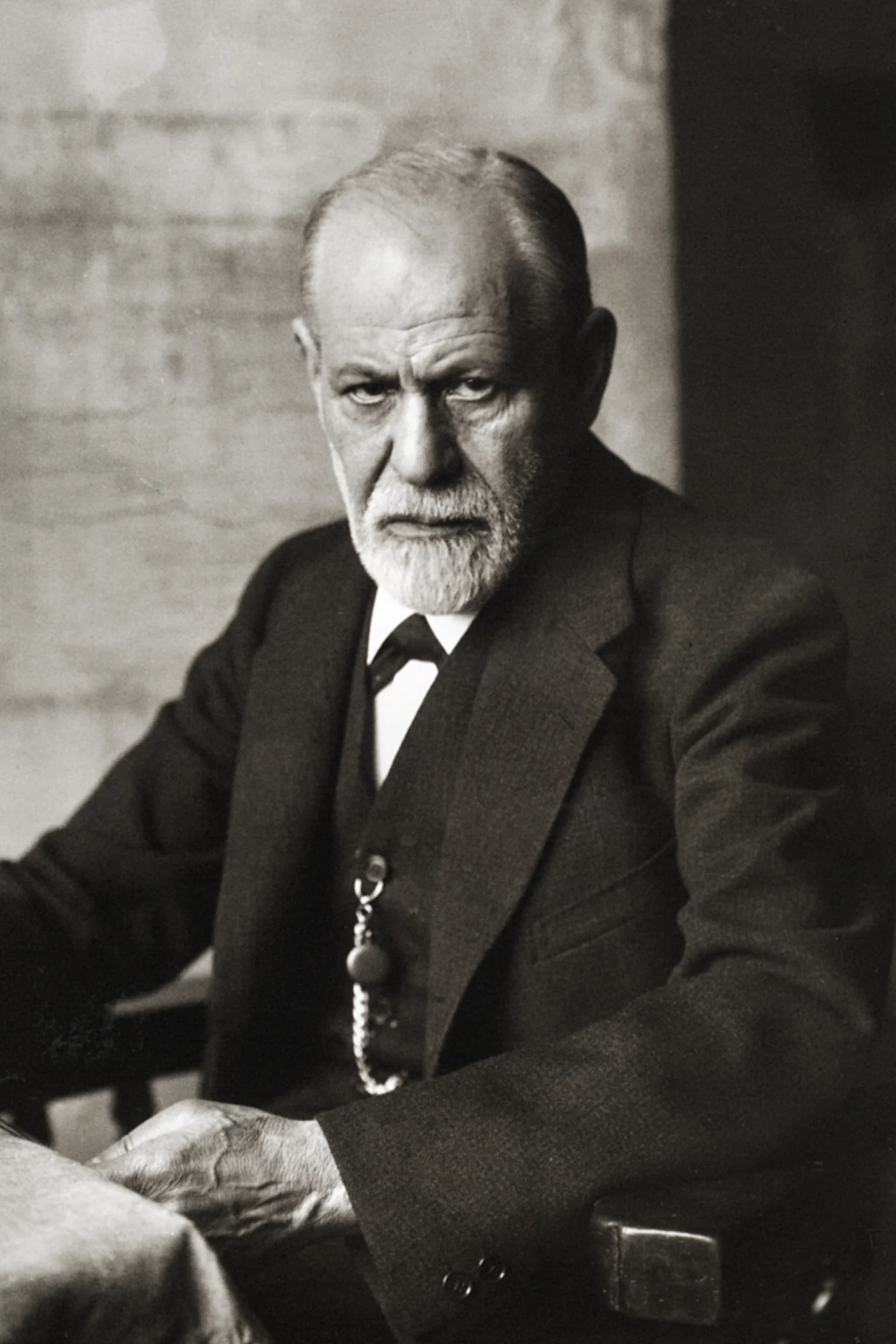

In psychoanalysis, defences are processes that protect a person against anxiety and internal conflict. Sigmund Freud established this approach, and Anna Freud developed it in The Ego and the Mechanisms of Defence. This history offers a framework for understanding experience; it does not itself provide a brain map (Cramer, 2000; A. Freud, 1966).
Defences usually operate without deliberate choice. In psychoanalytic theory, repression keeps painful content outside awareness; suppression can involve consciously setting a thought aside for a time. These terms should not be used interchangeably (Cramer, 2000).
For examples, see defence mechanisms, the brain and the face. Here, we take the next step: why do responses differ, and how much can brain research explain?
Which part of the brain chooses a defence?
Research has not established a specific region that selects denial, projection or repression. Connecting psychoanalytic defences to brain activity requires difficult decisions about how unconscious processes are defined and measured. Northoff and colleagues (2007) discuss interactions between emotional and cognitive processes, rather than a separate switch in the brain.
Clearer evidence comes from tasks in which researchers can specify what participants are doing:
| Process studied | Brain finding | Limit of interpretation |
|---|---|---|
| Reappraisal: changing the meaning of an emotional situation | A meta-analysis of 48 studies found involvement of prefrontal and parietal regions and modulation of amygdala activity | This concerns emotion regulation, not the identification of a centre for rationalisation (Buhle et al., 2014) |
| Deliberately preventing retrieval | Increased dorsolateral prefrontal activity and reduced hippocampal activity accompanied poorer subsequent recall | Conscious retrieval suppression does not establish unconscious Freudian repression (Anderson et al., 2004) |
Saying that the prefrontal cortex is responsible for denial therefore goes beyond the evidence. These studies examine particular tasks and group patterns; they do not let us identify an individual’s defence or a hidden meaning in their behaviour from a brain scan (Northoff et al., 2007; Buhle et al., 2014).
Why do defences differ between people?
There is no single explanation. Three lines of inquiry help make sense of the differences.
1. Development across the lifespan
Defences need not remain fixed from childhood into adulthood. A longitudinal study of more than 150 people found changes in defences assessed from their stories at ages 11, 12 and 18. Group trends do not justify assigning someone a psychological age from their behaviour (Cramer, 2007).
2. Relationships and a sense of security
In a study of 1,129 university students, attachment styles, defences and psychological distress were related. Such associations support investigating relational experience, but questionnaire data cannot establish that a particular upbringing inevitably produces a particular defence (Ciocca et al., 2020).
3. What feels threatening now
In the psychoanalytic model, the source of anxiety and the meaning of a threat matter when understanding a defence (A. Freud, 1966). A clinical discussion might ask whether criticism feels more like rejection or failure. This is a hypothesis to explore, not a rule that fear of rejection always produces denial.
These differences are not an invitation to label people. A more useful question is: what might this response protect in this situation, and what might it cost?
Can defences change?
In a study of 21 adults receiving long-term dynamic psychotherapy, improvement in defensive functioning was associated with later improvement in symptoms and functioning. The small sample and study design do not establish that changing defences alone caused recovery (Perry & Bond, 2012).
For personal reflection, try describing a situation: what happened, what you felt, how you responded and how you would like to respond next time. This is a suggested observation exercise, not a test for diagnosing an unconscious defence.
How do sleep and dreams fit in?

Freud connected dreams with unconscious wishes and conflicts, distinguishing the remembered dream from meanings explored through association. This is a historical psychoanalytic theory, not an established finding of neuroscience (Freud Museum London, n.d.).
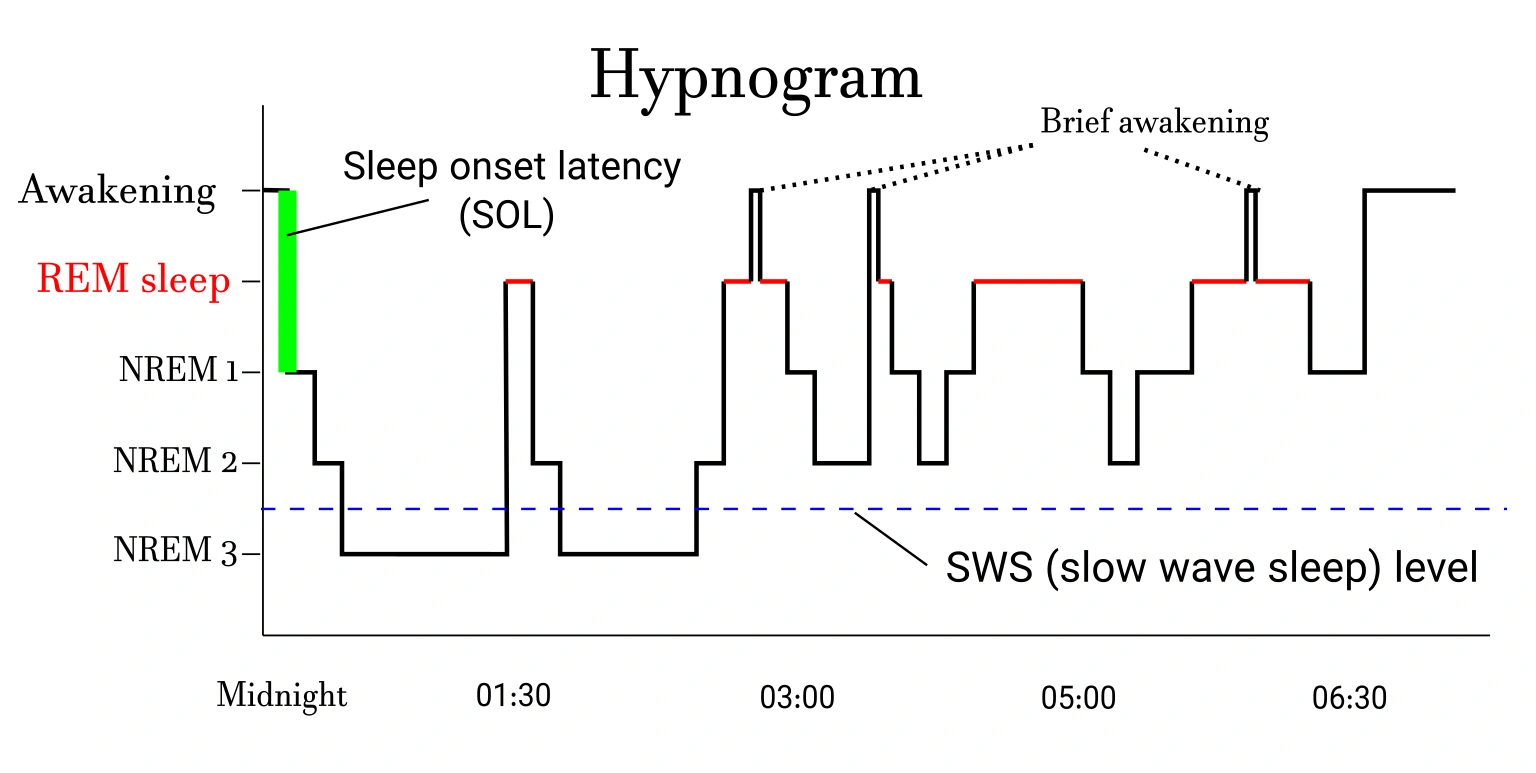
Sleep is a physiological state; dreaming is a subjective experience during sleep. In a study using electrical brain recordings and repeated awakenings, dream reports occurred during both rapid eye movement (REM) and non-REM sleep. Reports were associated with reduced low-frequency activity in posterior cortical regions. This association does not reveal a dream’s personal meaning (Siclari et al., 2017).
In another experiment, dreaming about a learning task was associated with better performance after sleep. This fits a connection between dreaming and memory processing; it does not prove that every dream has a specific function or that dreaming itself caused memory improvement (Wamsley et al., 2010).
It is possible to discuss the feelings and associations in a dream without treating it as proof of a hidden memory or a psychological diagnosis. Even Freud’s method emphasised the dreamer’s associations rather than extracting meaning from a fixed dictionary of symbols (Freud Museum London, n.d.).
What about apparently precognitive dreams?
A person may dream something and later encounter a similar event. That experience can feel deeply meaningful. The scientific question is narrower: was information about the future obtained reproducibly, beyond chance and previously available information? A resemblance between one dream and one event is insufficient to establish that claim.
Across two studies, participants remembered matching dream-event pairs more readily than non-matching ones, and a tendency to find correspondences between dreams and randomly paired news reports was associated with precognitive belief. These findings offer routes to understanding the feeling of having dreamed something before it happened; they do not explain every individual experience (Watt et al., 2014).
A fairer assessment would record dreams with dates and details before events occur, define matching criteria and a time window in advance, and count dreams that never match anything. This methodological suggestion is still no substitute for controlled testing with independent assessment. The sources reviewed here do not establish dreams as a reliable forecasting tool. Religious or personal meaning is a different question from an empirical test of prediction.
Common questions
Does forgetting an event mean I have repressed it?
No. Forgetting alone cannot establish that explanation. Participants in the retrieval-suppression experiment received deliberate instructions; extending its findings to the cause of forgetting a particular life event is not justified (Anderson et al., 2004).
Where can I start when exploring a dream?
As a conversation prompt, ask: what did I feel, and what does that feeling bring to mind? Keep the answer as a possibility for reflection. Do not use it as proof of a past event, a forecast or a judgement about someone else.
References
- Anderson, M. C., Ochsner, K. N., Kuhl, B., Cooper, J., Robertson, E., Gabrieli, S. W., Glover, G. H., & Gabrieli, J. D. E. (2004). Neural systems underlying the suppression of unwanted memories. Science, 303(5655), 232-235. https://doi.org/10.1126/science.1089504
- Buhle, J. T., Silvers, J. A., Wager, T. D., Lopez, R., Onyemekwu, C., Kober, H., Weber, J., & Ochsner, K. N. (2014). Cognitive reappraisal of emotion: A meta-analysis of human neuroimaging studies. Cerebral Cortex, 24(11), 2981-2990. https://doi.org/10.1093/cercor/bht154
- Ciocca, G., Rossi, R., Collazzoni, A., Gorea, F., Vallaj, B., Stratta, P., Longo, L., Limoncin, E., Mollaioli, D., Gibertoni, D., Santarnecchi, E., Pacitti, F., Niolu, C., Siracusano, A., Jannini, E. A., & Di Lorenzo, G. (2020). The impact of attachment styles and defense mechanisms on psychological distress in a non-clinical young adult sample: A path analysis. Journal of Affective Disorders, 273, 384-390. https://doi.org/10.1016/j.jad.2020.05.014
- Cramer, P. (2000). Defense mechanisms in psychology today: Further processes for adaptation. American Psychologist, 55(6), 637-646. https://doi.org/10.1037/0003-066X.55.6.637
- Cramer, P. (2007). Longitudinal study of defense mechanisms: Late childhood to late adolescence. Journal of Personality, 75(1), 1-24. https://doi.org/10.1111/j.1467-6494.2006.00430.x
- Freud, A. (1966). The ego and the mechanisms of defence. Publisher’s catalogue.
- Freud Museum London. (n.d.). Dream distortion; Freud’s method for interpreting dreams. Historical accounts of Freud’s theory. Dream distortion; Interpreting dreams.
- Northoff, G., Bermpohl, F., Schoeneich, F., & Boeker, H. (2007). How does our brain constitute defense mechanisms? First-person neuroscience and psychoanalysis. Psychotherapy and Psychosomatics, 76(3), 141-153. https://doi.org/10.1159/000099841
- Perry, J. C., & Bond, M. (2012). Change in defense mechanisms during long-term dynamic psychotherapy and five-year outcome. American Journal of Psychiatry, 169(9), 916-925. https://doi.org/10.1176/appi.ajp.2012.11091403
- Siclari, F., Baird, B., Perogamvros, L., Bernardi, G., LaRocque, J. J., Riedner, B., Boly, M., Postle, B. R., & Tononi, G. (2017). The neural correlates of dreaming. Nature Neuroscience, 20(6), 872-878. https://doi.org/10.1038/nn.4545
- Wamsley, E. J., Tucker, M., Payne, J. D., Benavides, J. A., & Stickgold, R. (2010). Dreaming of a learning task is associated with enhanced sleep-dependent memory consolidation. Current Biology, 20(9), 850-855. https://doi.org/10.1016/j.cub.2010.03.027
- Watt, C., Ashley, N., Gillett, J., Halewood, M., & Hanson, R. (2014). Psychological factors in precognitive dream experiences: The role of paranormal belief, selective recall and propensity to find correspondences. International Journal of Dream Research, 7(1), 1-8. https://doi.org/10.11588/ijodr.2014.1.11218