
In a meta-analysis of 17 studies with 13,666 participants, higher attachment anxiety and avoidance were associated with more marital infidelity, but the relationship was small, with a correlation of about 0.18 (Ghiasi et al., 2024). Attachment style is part of the picture, not the whole explanation.
In another study of 200 adults in Ecuador, Five-Factor personality traits predicted the desire for infidelity, but not actual unfaithful behaviour (Rodas et al., 2026). Wanting is not the same as acting.
This article reviews the reasons for infidelity based on the studies examined, explains how it relates to personality and attachment theory, and shows where counselling may reduce risk. The aim is neither to excuse infidelity nor to label people.
Can loving a partner and infidelity coexist?
The sources reviewed for this article did not measure what share of infidelity occurs alongside love for the partner, so I give no figure. Research generally does not treat infidelity as the product of a single cause. So when someone loves their partner and still cheats, we are not necessarily looking at a “bad person” or a “fake love”.
How research defines infidelity
Definitions of infidelity differ across studies. Reviews point to differences in definitions, attitudes, predictors and outcomes, and note that mononormative assumptions may shape how research is designed (Weiser & Shrout, 2024). Percentages should therefore be compared across studies with caution.
Reasons for infidelity: which factors does research show?
No standalone review of motives for infidelity turned up in the sources reviewed. The list below is built from the available studies and is not a ranking of importance:
- An unfulfilling relationship: one of three interlocking factors in a qualitative study of 22 young women who had been unfaithful in committed relationships (Fife et al., 2026).
- Motivation and rationalizing: the other two factors in that study. The decision was a non-linear process, not a sudden moment.
- Stress and social support: in a sample of 1,070 partnered U.S. adults, parents reported more desire for and engagement in infidelity than non-parents during COVID-19, and men more than women. The authors linked this to vulnerability under high stress (Campbell et al., 2025). This is a correlation and does not prove causation.
- History and opportunity: for actual behaviour, a history of infidelity, older age, male sex and cumulative opportunity mattered more than personality structure (Rodas et al., 2026).
- The pull of novelty in very intense relationships: a theoretical hypothesis, discussed below.
The Fife et al. sample is small and female only, so it cannot be generalised to everyone. Key sentence: infidelity looks more like a decision pathway than proof that love was absent.
What does personality explain, and what does it not?
A note on terms: the studies above measure personality as “traits”, meaning continuous dimensions such as the Five-Factor model, not categorical “types”. So we cannot say “this personality type cheats”.
In the Ecuador study, higher openness to experience and lower agreeableness predicted the desire for sexual infidelity. For actual behaviour, the Five-Factor traits were not significant (Rodas et al., 2026).
Study: personality, desire and behaviour
Participants were 200 Ecuadorian adults who completed the Big Five Inventory and an infidelity conduct scale. Hierarchical regression suggested that personality structure is more closely tied to the cognitive and emotional precursors of infidelity, while actual acts are better explained by relationship history and cumulative opportunity. The design is cross-sectional and the sample is small.
Another study of 399 Honduran university students examined subclinical narcissistic traits. In men, recalled parental emotional warmth was directly linked to less infidelity, but indirectly linked to more infidelity through higher narcissistic traits. In women, none of the parenting or personality variables were significant predictors (Pineda-Sandoval et al., 2026).
These data are self-reported and cross-sectional. We can say an association was observed, not that narcissism or parenting style “causes” infidelity. Personality is part of the context, not destiny.
What does attachment theory say, and what does the evidence show?
Attachment theory concerns patterns of feeling and behaviour around closeness and security in relationships. The meta-analysis discussed here examined attachment through anxiety and avoidance. In plain terms, attachment anxiety means greater worry about rejection or abandonment, and avoidance means discomfort with closeness and a preference for emotional distance. This plain-language gloss is mine, not the paper’s formal definition.
Study: attachment and marital infidelity
The meta-analysis by Ghiasi and colleagues combined 17 studies with 13,666 participants. Higher attachment anxiety and avoidance were associated with more marital infidelity (r = 0.18, 95% CI 0.14 to 0.22). Fearful (r = 0.19) and dismissive (r = 0.07) attachment were also correlated with infidelity, but no association was found for preoccupied attachment (Ghiasi et al., 2024).
These figures need careful reading. A correlation of 0.18 is a small effect and explains only a small share of differences between people (its square is about 0.03). Fearful attachment showed a stronger link than dismissive, but both were small.
The abstract does not report tested mechanisms. Explanations such as “seeking reassurance elsewhere” or “moving away from intimacy” are only hypotheses, and I have no direct evidence for them in the sources reviewed. The authors suggest that attachment style should be considered in couple therapy for infidelity. That is the researchers’ recommendation, and I have not examined its effectiveness here.
How should personality and attachment be read together?
In the sources reviewed, both have weak or limited links with infidelity behaviour. I found no study that tests personality and attachment together in one model to predict actual behaviour, so we cannot say which matters more.
What fits the evidence is this: traits and attachment style may shape desire, vulnerability and reactions to frustration, while history, situational pressure and opportunity influence what turns into action. This is an editorial synthesis, not the result of a single study.
Do genes or biology explain infidelity?
A recent narrative review of the genetics of infidelity concludes that the evidence is heterogeneous and underpowered. A twin-based heritability estimate of about 62% in men and 40% in women has been reported for extrapair mating, but it has not been reproduced in a comparable sample and describes population variance, not the cause of one person’s behaviour. Associations with candidate genes are small and inconsistent (Zambrano, 2026). This evidence cannot be used to predict or excuse an individual’s behaviour.
Self-expansion and the pull of novelty: a theoretical hypothesis
The Dyadic Universe Model proposes that in very intense relationships, when partners replace each other’s other domains of identity and activity, a sense of compression may build up. This is predicted to be stronger for people with a greater drive for novelty and growth, and may lead to efforts to restore autonomy or to relationship instability (Yan & Li, 2026).
The model is conceptual, and its authors say it needs empirical testing. It is not directly about infidelity. Read it as a hypothesis, not a settled result.
Counselling skills and prevention: when is seeking help useful?
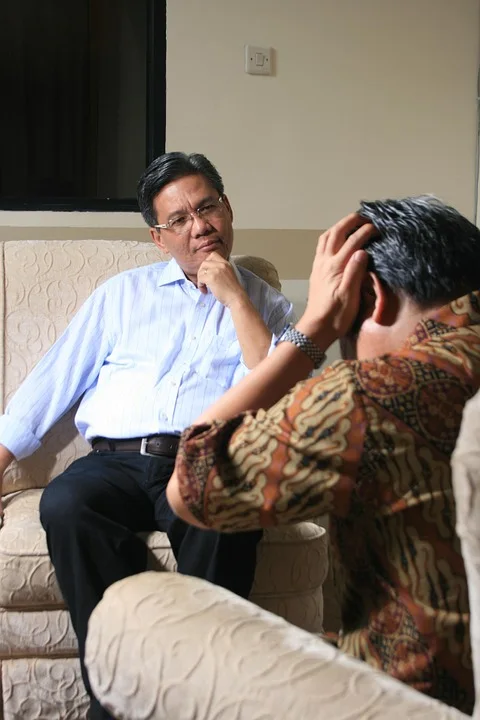
Counselling does not guarantee that infidelity will not happen, and the evidence I reviewed does not directly show a preventive effect. But because factors such as an unfulfilling relationship and rationalizing play a role in the decision pathway (Fife et al., 2026), learning relationship skills may reduce risk. Other research has followed relationship outcomes after couple therapy involving infidelity, including a five-year follow-up by Marín et al. (2014). I verified only its bibliographic details here and do not report its findings.
The list below is an editorial summary of skills commonly practised in couple and individual counselling, not the result of one specific study:
- Talking clearly about unmet needs before they turn into distance or secrecy.
- Recognising your own attachment pattern, for example a strong need for reassurance or a pull to withdraw from closeness under tension.
- Managing conflict without contempt or prolonged withdrawal.
- Setting boundaries with acquaintances, colleagues and online spaces.
- Recognising your own high-risk moments, such as loneliness, emotional exhaustion, life pressure or alcohol.
- Noticing the justifications the mind produces, such as “it’s only a conversation”.
Which signs make seeing a counsellor reasonable?
- Long emotional distance or repeated conflicts without resolution.
- Small secrets that gradually grow.
- Temptation or emotional involvement with a third person.
- Life crises such as illness, bereavement or the pressure of fertility treatment.
Seeking help is not only for after infidelity. You can go when you only have worry or temptation. Individual counselling suits issues that are mainly personal, and couple counselling suits issues in the relationship pattern. When choosing a counsellor, ask about their approach, the structure of sessions and confidentiality.
Further reading
Limits of the evidence
- I read only the abstract of the attachment meta-analysis, so I cannot assess heterogeneity or the quality of individual studies.
- No recent meta-analysis on personality and infidelity was found in this review, so the personality section relies on individual studies.
- Most data are self-reported and cross-sectional, and some samples are small or student samples.
- The effects of attachment and personality are small, and rates of infidelity and its predictors vary across cultures and samples.
- Statistical association does not mean cause, and no personality trait or attachment style is a sure sign of infidelity.
- This article does not replace individual assessment or counselling.
Frequently asked questions
Does infidelity mean the person does not love their partner?
Not necessarily. The sources reviewed did not measure this directly, but they show that the decision to be unfaithful has several factors, and an unfulfilling relationship is only one of them.
Can personality or attachment style tell us who will cheat?
No. Insecure attachment has a small correlation with infidelity, and personality traits mostly explain desire and context. In the Ecuador study, actual behaviour was more closely related to history, age, sex and opportunity.
Can counselling prevent infidelity?
No firm promise can be made. Counselling can strengthen communication, boundary-setting and awareness of risky moments, and give a safe place to examine temptation or emotional distance.
References
- Campbell, J. T., Viegas de Moraes Leme, L. F., & Gesselman, A. N. (2025). Infidelity among parents in committed relationships during the COVID-19 pandemic. PLOS ONE. https://doi.org/10.1371/journal.pone.0329015
- Fife, S. T., Janes, E., Yigit, Ş. S. E., Cho, S., Azam, A., Franco, A., & Jabalkandi, S. (2026). Infidelity decision-making by emerging adult women: A grounded theory. Journal of Marital and Family Therapy. https://doi.org/10.1111/jmft.70129
- Ghiasi, N., Rasoal, D., Haseli, A., & Feli, R. (2024). The interplay of attachment styles and marital infidelity: A systematic review and meta-analysis. Heliyon. https://doi.org/10.1016/j.heliyon.2023.e23261
- Marín, R. A., Christensen, A., & Atkins, D. C. (2014). Infidelity and behavioral couple therapy: Relationship outcomes over 5 years following therapy. Couple and Family Psychology: Research and Practice. https://doi.org/10.1037/cfp0000012
- Pineda-Sandoval, S., Bustillo-Núñez, C., Gómez, H., Chevez, J., Sosa, Y., Kowal, M., & Landa-Blanco, M. (2026). Narcissistic traits as mediators in the relationship between parenting styles and nonconsensual nonmonogamy in university students. Frontiers in Psychology. https://doi.org/10.3389/fpsyg.2026.1885928
- Rodas, J. A., Abad, M., Barandica, A., Leon-Rojas, J. E., Valdevila Figueira, J. A., & Oleas, D. (2026). Infidelity conduct and desire: The differentiated contribution of broad personality traits. Frontiers in Psychology. https://doi.org/10.3389/fpsyg.2026.1939819
- Weiser, D. A., & Shrout, M. R. (2024). Revisiting the Charmed Circle: A reflexive examination of unanswered questions in the infidelity literature. Social and Personality Psychology Compass. https://doi.org/10.1111/spc3.12983
- Yan, Y., & Li, J. (2026). The Dyadic Universe Model: A process theory of centralization, compression, and autonomy in romantic relationships. Frontiers in Psychology. https://doi.org/10.3389/fpsyg.2026.1935191
- Zambrano, A. K. (2026). Genetic predisposition and infidelity: From molecular variation to relationship behavior. A narrative review. International Journal of Molecular Sciences. https://doi.org/10.3390/ijms27198510